Malacca- The Historical City
Malacca is located on the West Coast of Peninsular Malaysia facing the Straits of Malacca, about 150 kilometres from Kuala Lumpur between the states of Negeri Sembilan and Johor. Malacca’s history began in 1403 with the arrival of Parameswara, an exiled prince from Sumatra. In time, Malacca gained prominence as a vibrant port and maritime trading centre for ships from India and China. In 1511, the Portuguese conquered Malacca and ruled for 130 years before the Dutch took over to reign for another 154 years. Malacca in 1824 fell to the hands of the British Empire who ruled until the country gained independence in 1957. Today, one will find many remnants of the glorious past dated back more than 600 years ago in this Historical City which makes it an interesting place not to be missed.
Suggested places of interest in no particular sequence:
1) A Formosa
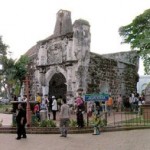 A fortress built by the Portuguese and it suffered severe damages during the Dutch invasion. Timely intervention by Sir Stamford Raffles saved what remains of the fort today.
2) St Paul’s Church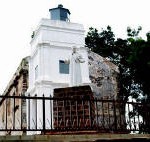
Built in 1521 by the Portuguese and was renamed to St Paul’s Church by the Dutch. St. Francis Xavier was buried here in 1553 before his body was transferred to Goa in India.
3) St Francis Xavier Church
A Gothic style church built in 1849 and was dedicated to St. Francis Xavier who was known as “The Apostle of The East” for his work in South East Asia during the 16th century.
4) St Peter’s Church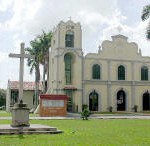
Built in 1710 and is now considered to be the oldest Roman Catholic church in Malaysia
5) The Stadthuys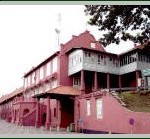
Built in 1650 as the official residence of Dutch governor and is a major landmark in Malacca. It now houses the Museum of History and Ethnography which has many traditional bridal costumes and relics on display.
6) Christ Church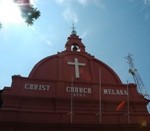
Another legacy left behind by the Dutch and is just next to the Stadthuys. Under the British Empire it was used as an Anglican church and a weathercock as well as a bell tower was added to its design.
7) Dutch Cemetery
The cemetery was gazetted as a national monument under the Antiquities Act 1976. It was first used in the last quarter of the 17th century and consists of 5 Dutch graves and 33 British graves.
8) St John’s Fort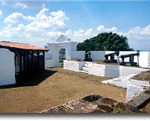
Located at St John Hill and was built by the Dutch in 18th century. One interesting feature about this fort is that all the canons embrasures face inland as most of the attacks during that time came mainly hinterland instead of from the sea.
9) Bukit Cina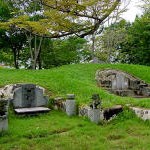
It was the official settlement of the entourage that arrive together with Princess Hang Li Po whom is to be married to the Sultan of Malacca. Today, Bukit China is believed to be the largest Chinese cemetery outside China with 12000 graves with many of the tombs dating back to the Ming dynasty.
10)Hang Li Po’s Well
It was built by the followers of Hang Li Po for the source of water and the Dutch enclosed it with stout walls to reserve it for their exclusive use during great droughts.
11)British Cemetery
The burial ground for the British soldiers who died fighting the resistance by the locals led by Dato’ Dol Said over the dissatisfaction on some taxes imposed.
12)Hang Tuah Mausoleum
The famous Malay warrior who is a legend in the history of Malacca fought and defended successfully countless attacks against Malacca together with his 4 other comrades Hang Jebat, Hang Lekir, Hang Lekiu and Hang Kasturi.
13)Kampung Keling Mosque
The mosque has Sumatran architecture influence, featuring a three-tiered roof rising like a pyramid and a beautifully-carved wooden ceiling. It has an odd minaret structured like a pagoda, reflecting an East-West architecture blend. It is believed to be the oldest mosque in the country.
14)Cheng Hoon Teng Temple
Built in 1646 and is the oldest Chinese temple in the country. All the materials were shipped out of China.
15)Jonker’s Street
Once the richman’s street and now a living proof of Malacca’s rich baba-nyonya heritage. The street is also famous for its antique shops.
16)Malacca’s Sultanate Palace
Situated at the foot of St. Paul’s Hill. A wooden replica of the Melaka Sultanate’s Palace and the architectural design of the palace is based on the description in the Malay Annals or ‘Sejarah Melayu’ and is the only one of its kind in Malaysia. The palace now houses the Melaka Cultural Museum and is truly remarkable architecture beauty.
If you have more time these places would be interesting to visit as well; Baba & Nyonya Heritage Museum, Hang Jebat Mauselom, Hang Tuah’s Well, Maritime Museum, Portuguese Square, Memorial Hall, Sam Po Kong Temple & Sri Poyyatha Vinayagar Moorthi Temple.
Other interesting places in Malacca if you are not into too much historical, you can also consider the following places; Ayeh Keroh Recreational Forest, Auyin Hill Resort, Butterfly farm, Crocodile farm, Gadek Hot Spring, Light and Sound Spectacular, Malacca Zoo, Mini Asean, Mini Malaysia, A Formosa Water World and Pulau Besar.
Apart from these places of interest, Malacca is also well known for its food. Popular Malacca favourites includes nasi lemak, satay celup (skewered food cooked in peanut sauce), rojak (food and vegetable salad), dodol (a sweet sticky palm sugar delicacy, cendol (cold dessert with coconut milk and palm sugar), chicken ball rice (where the rice is shaped into golf size balls and is served with chicken meat, cucumber and garlic-chilli sauce), otak-otak (spiced fish meat wrapped in banana leaves and grilled), perut ikan (preserved fish stomach in herbs) and the spicy Portuguese cooking such as the baked fish and the devil curry.
As for the souvenirs hunters, the popular souvenirs from Malacca would be the handicrafts, antiques and local products such as gula melaka (palm sugar), cincaluk (fermented shrimp relish), dodol and varieties of titbits especially from the famous Tan Kim Hock outlets.